
From the melt shop through the rolling mill to finishing, equipment runs under heavy load, heat and wear. On request, Traydon sources wear parts, parts made to drawing, gearboxes and machines for it.
This page follows the path of the material: for each production step it shows which parts are typically needed.
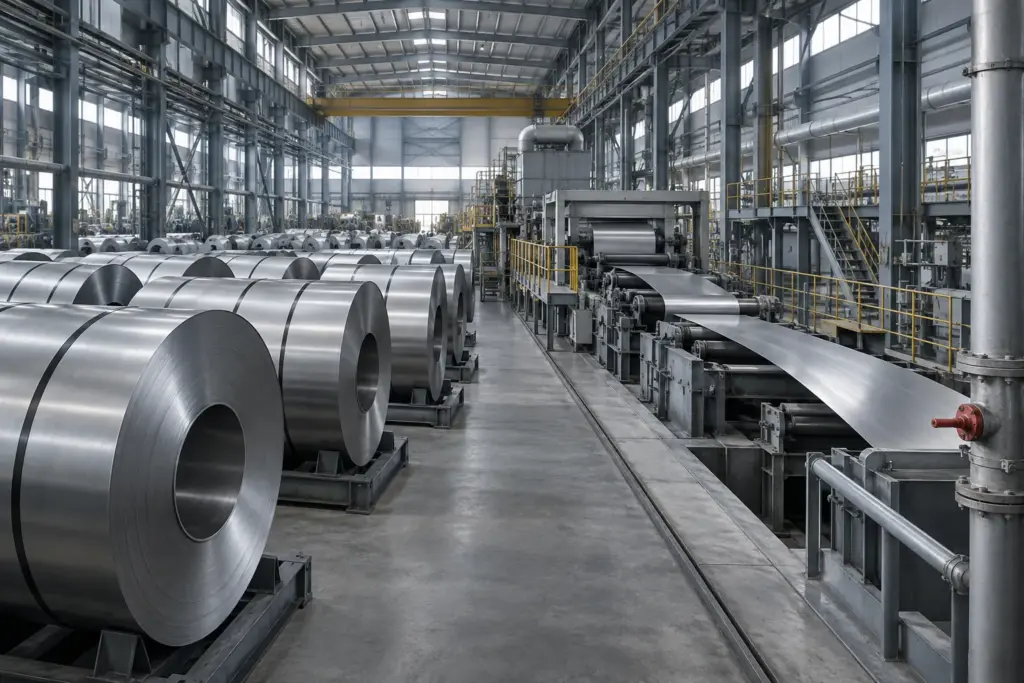
Steel production in 3D
From the electric arc furnace to the finished product: the equipment stands in a serpentine line as in a mill hall, and the red arrows on the floor show the path of the material. Point at a number or a unit and a bubble explains it.
Point the mouse at a number or a machine and a bubble explains it, no click needed. On a phone, tap the number. Drag to rotate the view.
All stations and parts
1. Melting
In the electric arc furnace or converter, scrap or hot metal becomes liquid steel.
- 1 : Melts scrap with the arc between electrodes and charge. Vessel, roof and refractory lining are highly stressed. Read more in the knowledge base: Electric arc furnace
- 2 : Graphite electrodes carry the current into the furnace. Arms, clamps and hydraulics move them. Read more in the knowledge base: Electrodes and arms
2. Continuous casting
The liquid steel runs from the ladle into the mould and solidifies into a strand: billet, bloom or slab.
- 3 : Transports the liquid steel from the furnace to the caster. Slide gate and refractory bricks are renewed regularly.
- 4 : Water-cooled copper mould in which the steel forms its first solid shell. Copper plates and copper tubes wear and are replaced to drawing. Read more in the knowledge base: Mould
- 5 : Support and guide the still glowing strand. Rollers, bearings and cooling work under great heat. Read more in the knowledge base: Strand guide rollers
3. Reheating
In the reheating furnace the feedstock is brought evenly to rolling temperature.
- 6 : Walking beam or pusher furnace with burners, roller tables and furnace doors. Spare parts: burner parts, furnace rollers, hydraulics.
4. Rolling
In the mill stands the glowing steel is shaped pass by pass.
- 7 : The rolls shape the steel. Grooved rolls carry turned grooves for bars, wire, rails and sections. They are re-turned and eventually replaced. Read more in the knowledge base: Rolls and grooved rolls
- 8 : Holds the rolls with their bearings and the screw-down. Roll bearings and chocks are typical spare parts. Read more in the knowledge base: Mill stand
- 9 : Transmits the torque from the gearbox to the roll and compensates for its height adjustment. Read more in the knowledge base: Drive spindle
- 10 : Pinion stands and spur gearboxes distribute the motor power to the rolls.
5. Cooling
On the cooling bed or in the cooling line the rolled stock cools down in a controlled way.
- 11 : Rakes or rollers carry the bars sideways until they have cooled. Drives, chains and rollers run in heat and scale. Read more in the knowledge base: Cooling bed
6. Finishing
In the finishing area the rolled stock is straightened, cut to length and inspected.
- 12 : Several offset rolls bend the rolled stock back and forth until it is straight. The rolls are made to suit the section. Read more in the knowledge base: Straightener and straightening rolls
- 13 : Cuts to fixed or customer length. Saw blades and knives are wear parts.
7. Marking and coating
Finally the product is permanently marked and, where required, coated.
- 14 : Stamps heat number, mill mark and standard into the passing product. Stamping wheel and type are changed per order. Read more in the knowledge base: Stamping machine
- 15 : Applies protective paint or preservation. Line pipe also receives its printed marking here, for example to API. Read more in the knowledge base: Coating unit
8. Finished products
Depending on the mill, different products leave the end of the line.
- 16 : Wire wound into coils – among other things the input material of the cable and wire industry.
- 17 : Plate and strip for steel construction, vessels and mechanical engineering.
- 18 : Seamless or welded tubes, for example line pipe for oil and gas.
Requirements along the steel process
Melt shop and continuous casting
Copper moulds and crystallisers made to drawing, pumps, hydraulic cylinders, motors and couplings for furnaces, ladles and casters.
Hot and cold rolling mill
Rolls and grooved rolls, rolling tools, cardan shafts, gearboxes, bearings and roller table motors.
Finishing lines
Straightening, sawing, chamfering, testing and bundling of tubes and long products.
Marking and identification
In-line stamping machines for rails, beams and sections, plus stamping wheels and type.
Coating and preservation
Preservation lines, internal and external pipe coating, paint and grinding booths.
Parts and equipment in practice
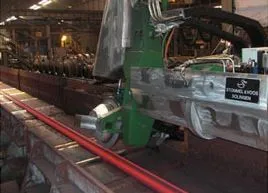
In-line marking
A stamping machine marks the still-hot rail directly in the rolling line.
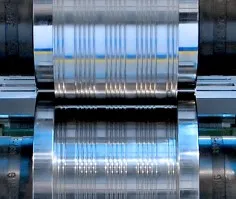
Grooved roll
Roll with turned grooves for long products.
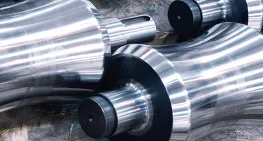
Rolls made to drawing
Finished rolls with ground journals.
Typical sourcing tasks
- Wear parts made to drawing or sample when the original manufacturer no longer supplies
- Spare parts for gearboxes and drives in rolling and conveying equipment
- Gearbox service and special gearboxes through our partner PW Hueber
- Machines for tube and section processing or for marking long products
- Semi-finished products, flanges and fittings
Which details help
- Drawing with revision status, or photos and dimensions of the old part
- Material and operating conditions (temperature, load, type of wear)
- For gearboxes: nameplate, ratio, power
- For machines: product, dimensions and throughput
- Quantity and required date
Frequently asked questions
What is a grooved roll?
A roll with turned grooves, called passes. During rolling it gives bar steel, wire rod, rails or sections their shape step by step.
Can Traydon supply rolls and rollers made to drawing?
Yes, on request. We need the drawing with material, hardness and tolerances, or a sample part.
Does Traydon also supply complete plants?
We source machines and plants from manufacturers. The respective quotation states who plans, installs and commissions.
Related areas
Request items for the steel industry
With drawing, photo or nameplate.