
Gearboxes adapt the speed and torque of the motor to the machine. The design determines how motor and output are arranged and how much energy is lost along the way.
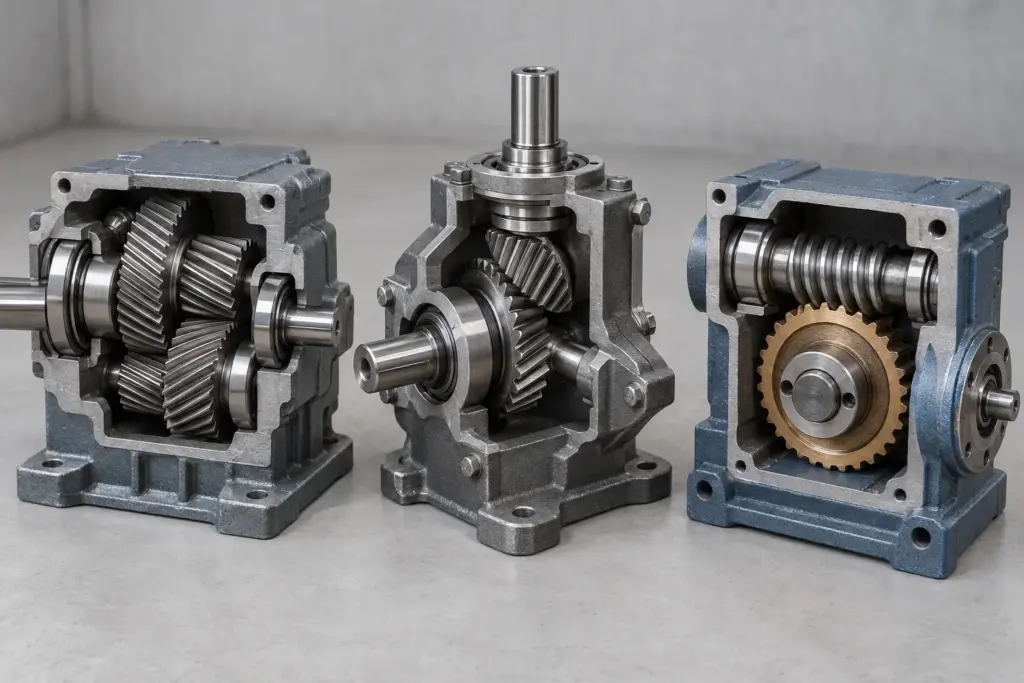
Three basic designs
Helical gearboxes have parallel shafts, high efficiency and are the most common design. Bevel gearboxes turn the power through 90 degrees and are also very efficient. Worm gearboxes reach high ratios in one stage and run quietly, but have a clearly lower efficiency and can be self-locking depending on the ratio.
For the replacement, ratio, output torque and service factor, the design with mounting position, the output shaft as solid or hollow shaft and the foot or flange mounting matter. The mounting position also determines the oil quantity.
What a request for a gearbox should contain
- nameplate of the gearbox or geared motor
- ratio and output speed
- design, mounting position and shaft version
- output torque or service factor
- motor: included or gearbox only
Read more
Similar requirement?
Send us your parts list, a nameplate or a drawing. We check the sourcing and get back to you.