
A new bearing only solves the problem if the cause of the old damage has been removed. Otherwise the replacement fails just as early. The damage pattern reveals a lot about the cause.
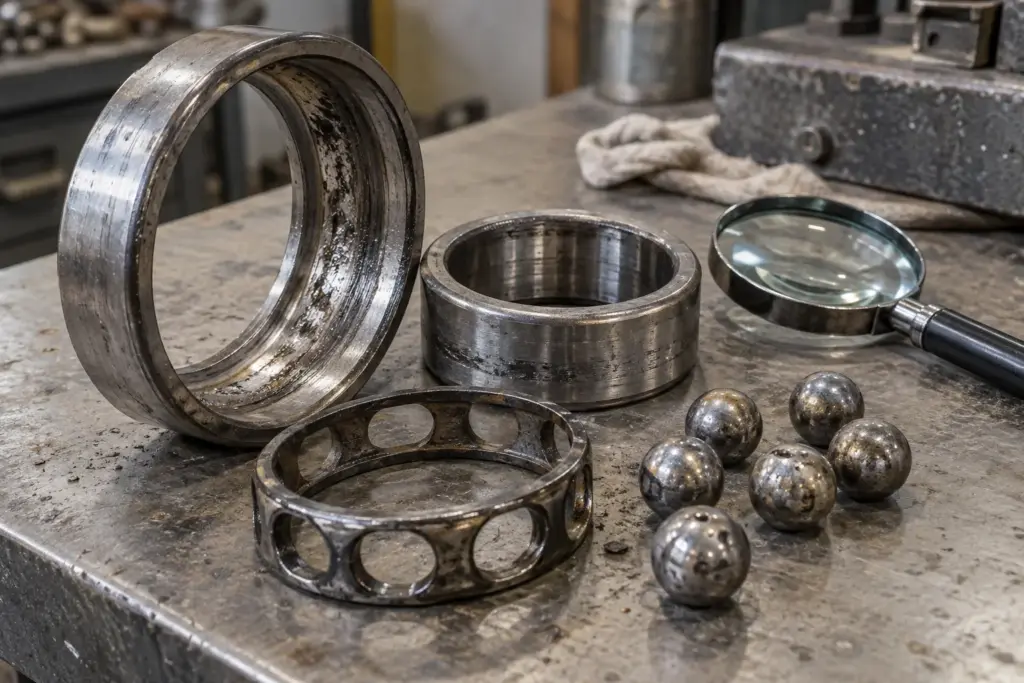
Typical damage patterns
Fatigue shows as flaking on the raceway and is the normal end of life for correctly designed bearings. Dull, worn raceways point to contamination or insufficient lubrication, discolouration to excessive temperature. Rust is caused by moisture.
Washboard-like patterns on the raceway often result from current passage, for example in motors on a frequency inverter. Indentations at the spacing of the rolling elements point to impacts during mounting or to vibration at standstill. ISO 15243 classifies the damage types.
What a request after bearing damage should contain
- full bearing designation with suffixes
- photos of the damage, if possible
- installation point, speed and lubrication
- whether insulated bearings or a different clearance are wanted
- quantity and requested delivery date
Read more
Similar requirement?
Send us your parts list, a nameplate or a drawing. We check the sourcing and get back to you.